Functional Bag Charms: What the Trend Really Means for Buyers and Product Developers
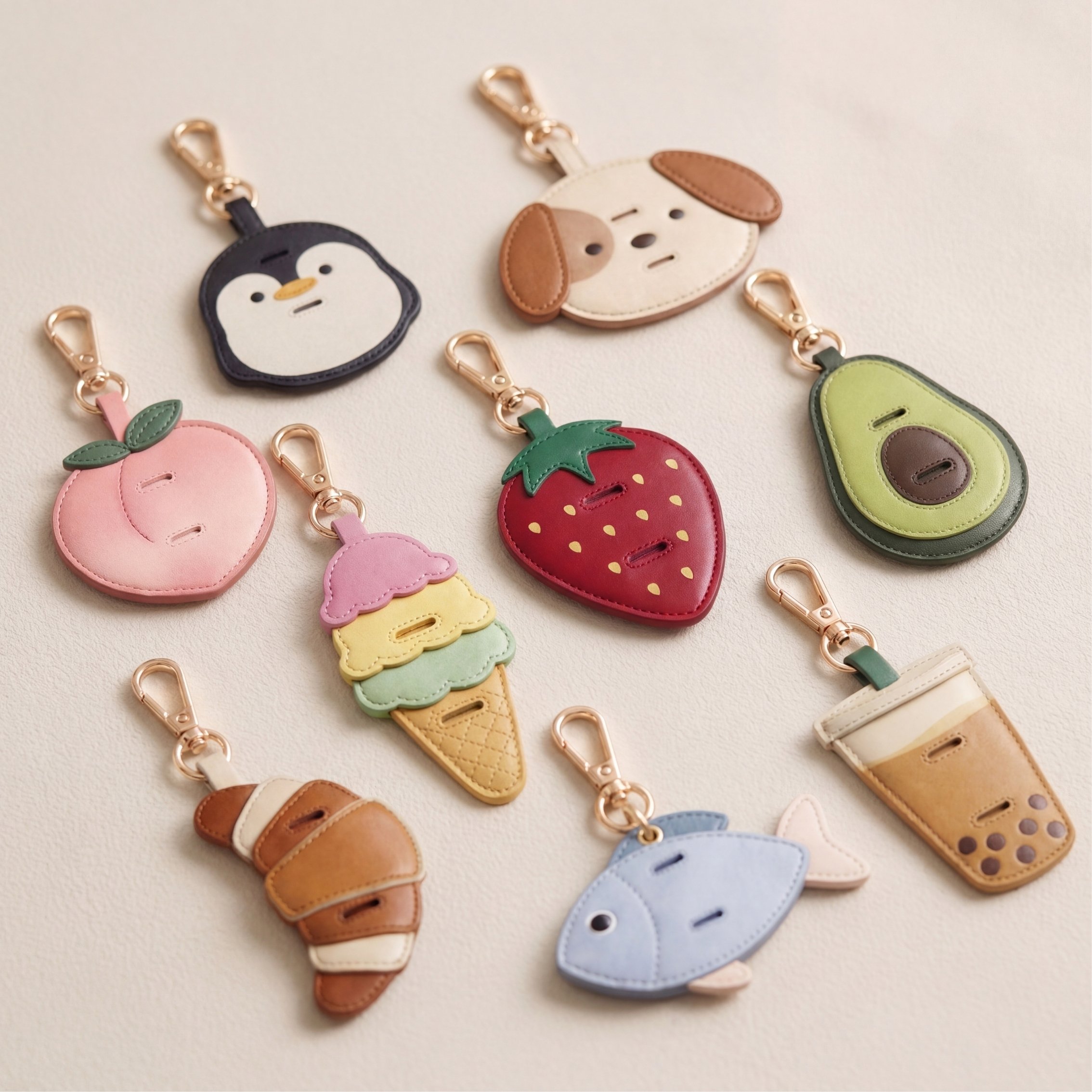
Short answer: Decorative bag charms have already delivered their boom — media coverage confirms the category is now mainstream, not novelty. The next differentiation window for accessory buyers is
Function: charms that also alarm, hold cards, hold eyeglasses, or find keys. But functional charms only work commercially when they solve a real use problem. Validate the scenario before you develop, and treat a functional charm as an engineering project, not a decoration project.


Bag charms moved from niche to mainstream over 2025–2026:
- Forbes (May 2025) reported bag charms "booming" as a statement accessory that blurs the line between adornment and personal identity.
- Condé Nast Traveller (Jul 2026) featured 24 bag charm styles — from Hermès rodeo charms to Coach taxi charms — confirming the category's presence across price tiers.
- Vogue (Jun 2026) covered bag charms within its summer 2026 handbag trends, showing the category has entered the fashion mainstream.
- Numéro highlighted charm-adjacent designs with built-in utility, including Balenciaga's mini-flask and Louis Vuitton × Takashi Murakami keyholders — evidence that major houses are already adding function to charms.
- For balance: some 2026 commentary predicts brooches will replace charms as the next novelty. This is normal category churn — and it is exactly why functional charms, which answer real needs rather than pure novelty, are the more durable play.
What "Functional" Actually Covers
The functional charm spectrum, from light utility to full function:
- Anti-theft / alarm charms — pull the strap and an alarm sounds; protects keys, bags, and luggage in crowded environments.
- Card-holder charms — a charm that also carries a transit card or a few cards.
- Eyeglass-holder charms — clips or sleeves that keep glasses secure and findable.
- Key-finder charms — attached to keys so they are never lost in the bag again.
- Tech-adjacent holders — small cases for earbuds or cables, styled as charms.
The common thread: each one solves a moment of friction in daily life. That is what separates them from decoration.
Why Functional Charms Are Commercially Different
- Differentiation. Everyone can make a cute charm. Function gives your SKU a reason to exist beyond looks.
- A new price point. Utility justifies a higher retail price than pure decoration — but only if the function demonstrably works.
- Gifting potential. "A charm that protects your bag" is a better gift story than "a charm."
- Longer lifecycle. A function that works keeps selling after the novelty wave passes.
The Development Reality: Function Changes Everything Downstream
Adding a function changes the manufacturing problem at every stage:
- Structure. Moving parts, springs, triggers, hinges replace solid cast shapes. Each new component is a new failure point.
- Process. Functional hardware needs mechanism design and assembly steps that decorative charms never touch.
- QC. Reliability testing becomes mandatory: Does the alarm trigger reliably? Does it stay silent when it should? Does the strap survive repeated use?
- Cost. More components, more assembly, more testing — functional charms cost more to develop and produce than decorative ones. That is not a reason to avoid them; it is a reason to validate the demand first.
This is why the supplier's experience matters more than the sketch. A manufacturer who has produced functional hardware knows where it fails; one who only makes decorative pieces learns on your order.
How to Validate Before You Develop
Run three checks before committing:
- The scenario check. Is there a real, repeated moment where your customer uses this function? Alarm charms work because commutes and night travel are real. A charm with a built-in feature that nobody uses is just a more expensive charm.
- The retail story check. Can you sell it in one sentence? "A charm that finds your keys" — yes. "A charm with five hidden functions" — no, that's a gadget.
- The budget check. Function adds development steps: mechanism design, testing, QC. Confirm the development budget before sampling begins.
If all three pass, spec function-first: define the function, then the shape, then the material and finish.
A Note From EDGE
Functional bag charms are not a concept at EDGE Accessories — they are a running product line. Our vintage key alarm bag charm pairs a textured leather cover with an integrated anti-theft alarm: pull or disconnect the strap and an alarm sounds, protecting keys, bags, and luggage. It is fully customizable — materials (genuine leather, PU, plush), hardware and plating, branding, and packaging — and is offered as a development reference for brands.
FAQ
- Are bag charms still trending in 2026? Yes — Forbes (May 2025), Vogue and Condé Nast Traveller (mid-2026) all confirm bag charms are a mainstream accessory category, with function emerging as the next layer.
- What is an alarm bag charm? A bag charm with an integrated anti-theft alarm: when the strap is pulled or disconnected, a loud alarm sounds. It is designed for keys, bags, and luggage.
- Are functional charms more expensive to develop? Yes. Mechanisms, assembly, and reliability testing add development cost compared with decorative charms. Validate demand before committing.
- Can functional charms be customized? Yes — materials, colors, hardware, branding, and packaging can be tailored. Function can be combined with brand identity elements.
- How long does development take? For our alarm charm line, sampling is 3–7 days and bulk production 20–30 days after PP approval.